

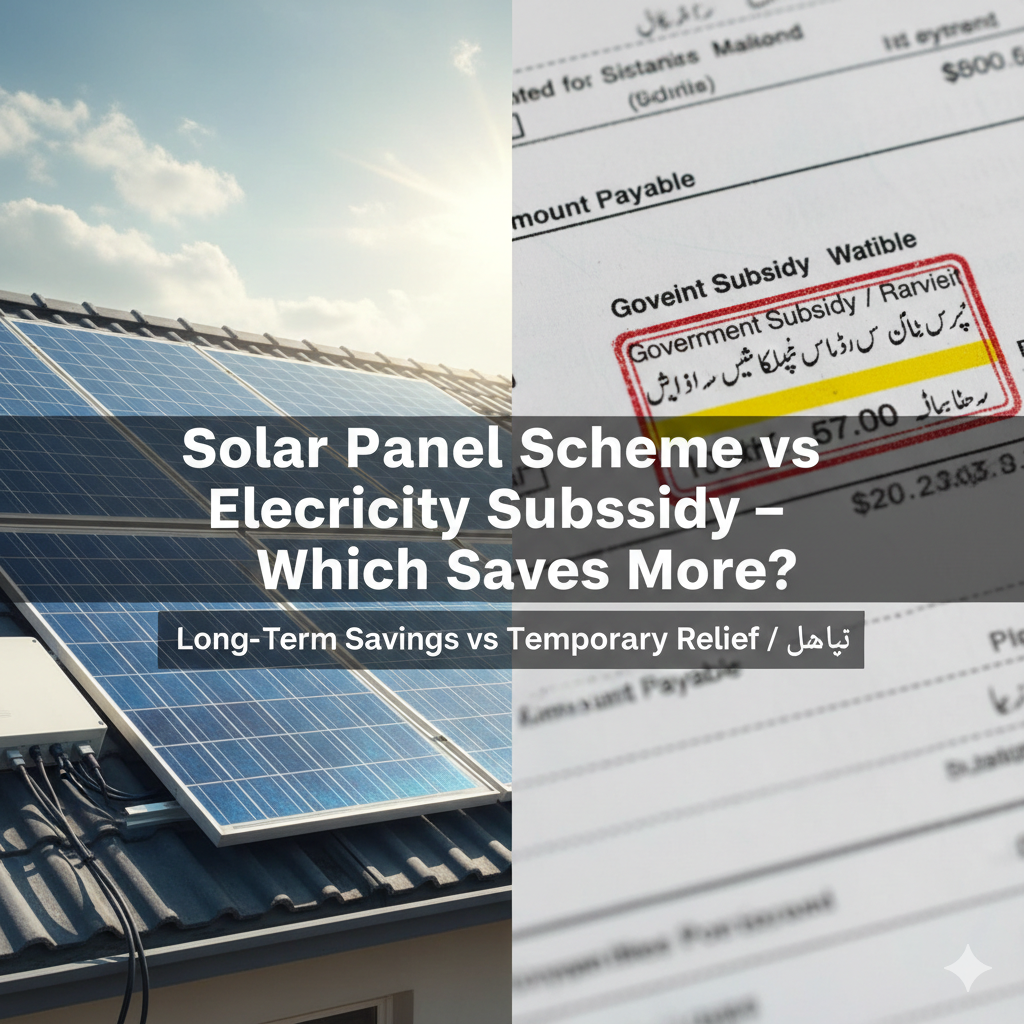
With electricity prices rising sharply in Pakistan, households are increasingly confused about the Solar Panel Scheme vs Electricity Subsidy and which option actually saves more money. Governments promote both as relief measures—solar panel schemes promise long-term savings through self-generation, while electricity subsidies offer immediate bill reduction. Both claim to lower electricity costs, yet they work in completely different ways, and one clearly saves more in the long run—but not for everyone.
This article compares Solar Panel Scheme vs Electricity Subsidy, explains how each works, breaks down real savings, and helps you decide which option realistically suits your household.
Asaan Karobar Loan 2026: When Punjab Decided Small Businesses Deserve Breathing Space
The Core Difference (In One Line)
Solar panel schemes reduce dependency
Electricity subsidies reduce bills temporarily
One changes the system.
The other only softens it.
What Is an Electricity Subsidy?
An electricity subsidy is government support that:
-
Reduces per-unit electricity cost
-
Caps bills for specific consumption slabs
-
Absorbs part of generation or fuel cost
The subsidy is applied directly to the monthly electricity bill.
Key Features of Electricity Subsidy
-
Immediate relief
-
No installation required
-
Depends on government budget
-
Can change, reduce, or end anytime
Electricity subsidies treat the symptom of high bills, not the cause.
What Is a Solar Panel Scheme?
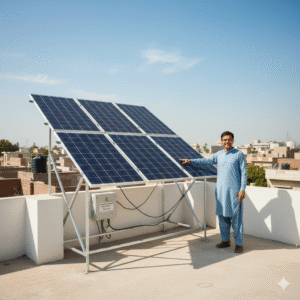
A solar panel scheme helps households:
-
Install solar panels (free, subsidized, or on installments)
-
Generate their own electricity
-
Reduce or eliminate reliance on the national grid
Key Features of Solar Panel Schemes
-
One-time installation
-
Long-term savings
-
Requires rooftop space and sunlight
-
High upfront value, low recurring cost
Solar schemes change how electricity is produced, not just how it is paid for.
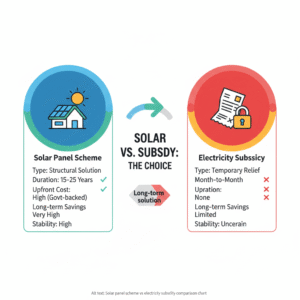
Solar Panel Scheme vs Electricity Subsidy – Quick Comparison
| Factor | Solar Panel Scheme | Electricity Subsidy |
|---|---|---|
| Type | Structural solution | Temporary relief |
| Duration | 15–25 years | Month-to-month |
| Dependency | Low (self-generated) | High (govt support) |
| Upfront Cost | High (govt-paid/partially paid) | None |
| Long-term Savings | Very high | Limited |
| Stability | High | Uncertain |
| Maintenance | Required | None |
| Coverage | Limited households | Mass population |
This table explains why the debate exists.
Also Read This
Ehsaas Kafalat Program – CNIC Check 8171, Payment Details & Women Suppor
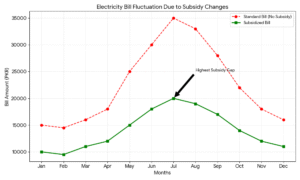
How Much Does an Electricity Subsidy Really Save?
For most households:
-
Savings are a few thousand rupees per month
-
Amount changes due to:
-
Tariff revisions
-
Fuel price adjustments
-
Government budget constraints
-
Example:
-
Bill without subsidy: PKR 18,000
-
Bill with subsidy: PKR 12,000
-
Monthly saving: PKR 6,000
-
Annual saving: PKR 72,000
Helpful—but fragile
How Much Does Solar Actually Save?
A small household solar system can:
-
Cover basic electricity needs
-
Reduce grid usage by 60–90%
Example:
-
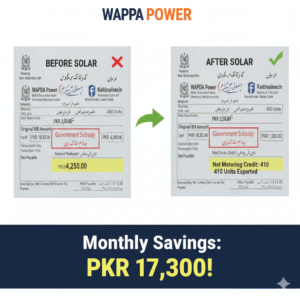
Monthly bill before solar: PKR 18,000
-
After solar: PKR 2,000–4,000
-
Monthly saving: PKR 14,000–16,000
-
Annual saving: PKR 168,000–192,000
Over 10 years, this equals millions of rupees in savings.
Also Read This
Why Solar Saves More in the Long Run
1. Tariff Increases Don’t Matter
When electricity tariffs rise:
-
Subsidies may shrink
-
Bills increase
Solar users remain largely insulated.
2. Subsidies Are Politically Fragile
Electricity subsidies:
-
Depend on government decisions
-
Are reduced under IMF programs
-
Can end without notice
Solar panels are unaffected by politics.
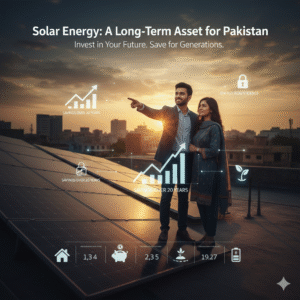
3. Solar Turns Expense Into an Asset
-
Subsidy = recurring support
-
Solar = permanent infrastructure
Once installed:
-
You own generation capacity
-
Savings compound every year
Where Electricity Subsidy Wins
Solar is not suitable for everyone.
Electricity subsidy is better if:
-
You rent your house
-
You lack rooftop space
-
Your electricity usage is very low
-
You cannot manage maintenance
For low-usage households, subsidy may be more practical.
Hidden Costs & Limitations of Solar Schemes
1. Limited Capacity
Government solar schemes usually:
-
Provide small systems
-
Cannot fully run heavy appliances
2. Maintenance Responsibility
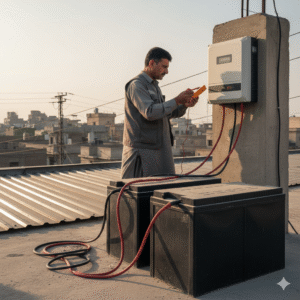
Solar systems require:
-
Panel cleaning
-
Battery/inverter replacement
-
Occasional repairs
Maintenance is manageable—but real.
3. Restricted Eligibility
-
Not everyone qualifies
-
Phases are limited
-
Approval takes time
Solar saves more—but not everyone gets access.
Why Government Still Pushes Electricity Subsidies
Because:
-
Subsidies help millions instantly
-
Solar benefits fewer households
-
Subsidies reduce public anger quickly
-
Solar requires high upfront costs.
Subsidies are politically efficient.
Solar is economically efficient.
Which One Saves More? (Clear Answer)
Short Term (1–2 Years)
➡️ Electricity subsidy saves more
Immediate relief, no setup.
Long Term (5–20 Years)
➡️ Solar panel scheme saves far more
Stable bills and energy independence.
Which Should You Choose?
Choose Electricity Subsidy If:
-
You rent your house
-
You have low electricity usage
-
You need immediate relief
-
Solar installation is not possible
Choose Solar Panel Scheme If:
-
You own your home
-
You have rooftop space
-
You plan to stay long-term
-
You want predictable savings
Why the Best Policy Is Both (Not One)
Smart energy policy uses:
-
Subsidies for short-term protection
-
Solar for long-term transition
Removing subsidies without solar hurts people.
Ignoring solar locks the system forever.
Common Myths
❌ Solar eliminates electricity bills completely
❌ Electricity subsidy is cheaper for the government.
❌ One policy should replace the other
Both have roles—on different timelines.
Frequently Asked Questions (FAQs)
Does solar eliminate electricity bills completely?
No, but it reduces them significantly.
Can an electricity subsidy stop suddenly?
Yes. It depends on budget and policy.
Is solar worth it without batteries?
Yes, especially for daytime usage.
Which option is financially safer long-term?
Solar—after installation.
Final Verdict
If the question is “Solar Panel Scheme vs. Electricity Subsidy—which saves more?”, the answer is clear:
-
Electricity subsidy saves today
-
Solar panel scheme saves for years
Subsidies are a cushion.
Solar is an escape.
One delays the pain.
The other end’s dependency.
Choose based on time, not promises.
Government-backed solar programs often appear simple on the surface, but eligibility rules, capacity limits, and hidden requirements can change outcomes. A detailed breakdown of these issues is explained in Punjab Solar Panel Scheme – hidden conditions, which helps households avoid unrealistic expectations before applying.
Energy relief policies do not exist in isolation. Their broader economic effects—especially on prices and purchasing power—are closely examined in how government schemes impact inflation, showing why short-term relief can sometimes create long-term pressure.
Many households rely on subsidies without realizing that several relief programs are temporary by design. Understanding government schemes that stop automatically is crucial to avoid sudden bill shocks when support phases out or policies change.
For a wider perspective on how governments choose between in-kind support and direct financial aid, the comparison in Rashan Riayat vs Cash Assistance – which is better? highlights similar trade-offs between control, flexibility, and long-term impact.
Ehsaas Kafalat Program – CNIC Check 8171, Payment Details & Women Suppor