

The Ehsaas Emergency Cash Program was introduced as a rapid relief measure during times of national crisis. Millions of Pakistanis received direct cash support when income sources collapsed and uncertainty ruled daily life.
But the program you remember is not the program that exists today.
Over time, the criteria for Ehsaas Emergency Cash have changed—quietly, structurally, and significantly. Many applicants who once qualified are now rejected without explanation. Others assume the program still works the same way. It does not.
This article compares the past criteria vs new eligibility rules of Ehsaas Emergency Cash and explains who qualifies now, who no longer does, and why.
What Was Ehsaas Emergency Cash (Original Phase)?
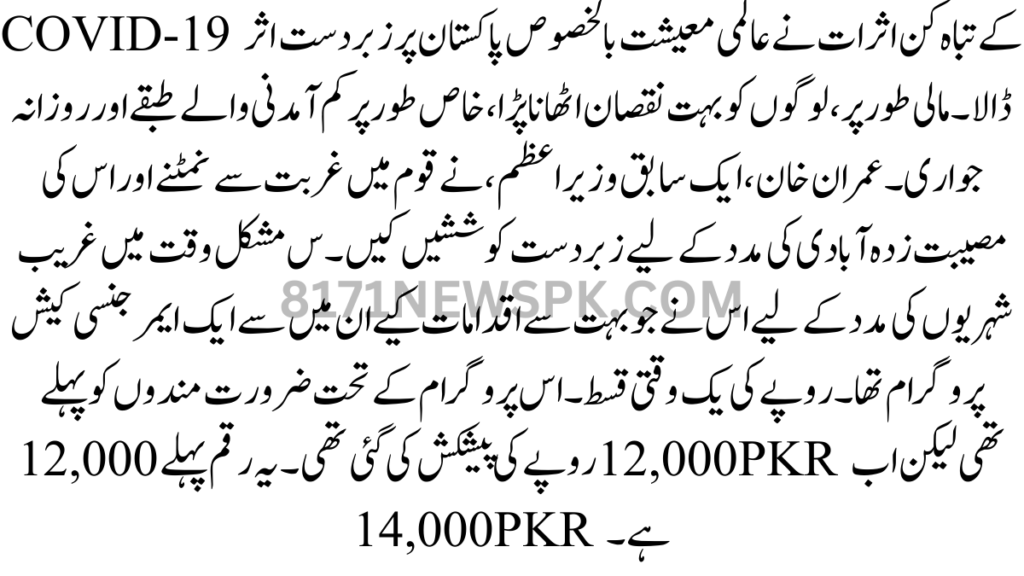
The original Ehsaas Emergency Cash Program was launched as a temporary crisis-response initiative, primarily during COVID-19 and related economic disruptions.
Core Objective (Past)
- Immediate financial relief
- Rapid disbursement
- Minimal documentation
- Maximum coverage
Speed mattered more than precision.
Past Eligibility Criteria (Original Phase)

During the initial phase, eligibility was intentionally broad.
Also Read This post
Ehsaas Kafalat Program – CNIC Check 8171, Payment Details & Women Suppor

You were eligible if:
- You were a Pakistani citizen with a CNIC.
- You were not a government employee
- You were not receiving a regular pension
- You were not a taxpayer above a certain threshold
Many families qualified even without prior registration.
Past Application Method
- CNIC sent to 8171
- Simple eligibility response
- Biometric verification at payment centers
- Cash disbursed quickly
The system prioritized inclusion over accuracy.
Why the Criteria Had to Change
Emergency programs are not meant to be permanent.
As the situation stabilized:
- Government budgets tightened
- Duplication issues emerged
- Ineligible beneficiaries were detected
- Long-term sustainability became a concern
This forced a shift from emergency relief to targeted welfare.
Ehsaas Emergency Cash – New Criteria Explained
The program today operates under much stricter rules, often integrated with BISP and NSER systems.
Key Shift:
From “Who needs help right now?”
To “Who qualifies under verified poverty data?”
New Eligibility Criteria (Current Phase)
1. NSER Registration Is Mandatory
Unlike the past, NSER (National Socio-Economic Registry) data is now central.
If your household:
- Is not registered in NSER
- Has outdated survey data
You are likely ineligible, regardless of need.
2. Poverty Score Threshold Applies
Eligibility is determined through:
- Household income indicators
- Assets
- Family size
- Employment status
If your poverty score exceeds the set threshold, emergency cash is denied.
3. Household-Based Assessment
Past system focused on individuals.
New system focuses on entire households.
If any family member:
- Has a government job
- Owns significant property
- Is a registered taxpayer
The household may be disqualified.
4. Integration with BISP Status
If you are:
- Ineligible for BISP Kafalat
- Blocked under BISP review
- Marked ineligible after revalidation
You may also be excluded from emergency cash.
Programs now share data.
5. Biometric & Data Accuracy Is Strict
Earlier, biometric failure could be retried easily.
Now:
- Biometric mismatches
- CNIC data errors
- NADRA inconsistencies
can permanently delay or block payment.
Past vs New Criteria – Side-by-Side Comparison
| Aspect | Past Criteria | New Criteria |
| Nature | Emergency relief | Targeted welfare |
| NSER Required | Not mandatory | Mandatory |
| Poverty Score | Not strictly applied | Strictly applied |
| Coverage | Very broad | Limited & focused |
| Data Verification | Basic | Extensive |
| Household Review | Minimal | Mandatory |
| Rechecking | Rare | Regular |
The shift is intentional — and irreversible.
Why Many Previous Beneficiaries Are Now Rejected
Common reasons include:
- Household income improved (on record)
- Asset detection through databases
- Family member employment discovered
- NSER data updated unfavorably
- Utility bills exceed limits
The system does not explain — it filters.
Is Ehsaas Emergency Cash Still “Emergency”?
Not in the original sense.
Today:
- It is conditional
- It is data-driven
- It is limited in scope
- It is often merged with broader welfare frameworks
The name remained. The philosophy changed.
Can You Become Eligible Again?
Yes — but only through data correction, not requests.
You must:
- Update NSER survey
- Correct CNIC and family data
- Ensure accurate household information
- Wait for re-evaluation cycles
Appeals without data change rarely succeed.
How to Check Eligibility Under New Criteria
Method 1: SMS
- Send CNIC to 8171
- Check response carefully
Method 2: BISP Tehsil Office
- Request NSER review
- Verify household data
Method 3: Official Portals
- Use only .gov.pk sources
- Avoid third-party sites
Common Misunderstandings
❌ “I received cash before, so I’ll receive it again”
❌ “Emergency cash is permanent”
❌ “Political reference can help”
❌ “Agents can re-activate eligibility”
All false.
The system responds only to data.
What the New System Does Better
Despite stricter criteria, the new system:
- Reduces duplication
- Targets the poorest households
- Improves transparency
- Protects limited funds
Accuracy replaced speed.
Frequently Asked Questions (FAQs)
Is Ehsaas Emergency Cash still active?
Only in specific situations or phases, not as a permanent open program.
Why did I qualify before but not now?
Because eligibility criteria shifted from emergency-based to poverty-score-based.
Can I appeal the rejection?
Only by updating NSER data, not by repeated SMS checks.
Does BISP eligibility guarantee emergency cash?
No, but it improves chances during special phases.
Final Verdict
The Ehsaas Emergency Cash Program you remember no longer exists in its original form. The past system prioritized urgency. The new system prioritizes verification.
If your data supports eligibility, assistance may come.
If not, silence follows.
Understanding the difference between past vs new criteria is the only way to avoid confusion, false hope, and misinformation.
Emergency aid fades.
Data remains.