

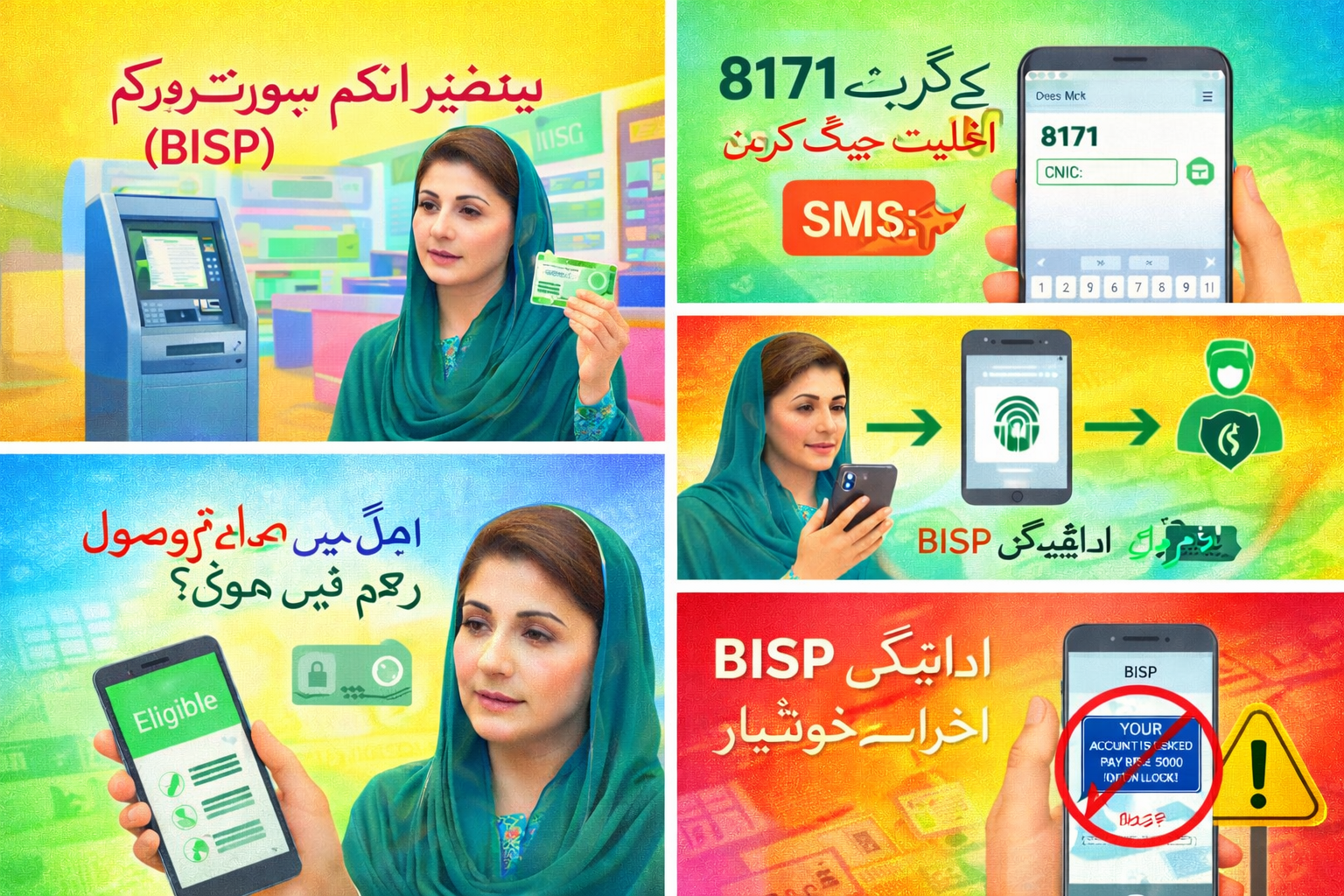
Eligible but Payment Not Received is one of the most confusing and frustrating situations applicants face in Pakistan’s government welfare schemes.
You check your status.
It says “You are eligible.”
And yet…
No SMS.
No cash.
No transaction.
Being marked eligible does not guarantee immediate payment. In Pakistan’s government scheme ecosystem, eligibility is only the first gate. Payments depend on multiple technical, administrative, and verification layers that most applicants never see.
This article explains the real reasons why people are eligible but do not receive payments, how the system works behind the scenes, and what to do next.
Also Read Related Programs
Ehsaas Kafalat Program – CNIC Check 8171, Payment Details & Women Suppor
E-Bike Scheme Pakistan – Complete Guide to Electric Bike Support Program
Aghosh Program Punjab – Maternal & Child Support Scheme Guide
National Health Insurance Program in Pakistan (Sehat Sahulat / Sehat Card)
First Reality Check: Eligibility ≠ Payment
Eligibility means:
-
You passed basic criteria
-
You are allowed to receive benefits
Payment means:
-
Verification completed
-
Payment cycle active
-
Funds released
-
Identity authenticated
Many applicants get stuck between eligibility and disbursement.
How Govt Scheme Payments Actually Work
Most schemes (Ehsaas, BISP, Rashan Riayat, subsidies, stipends) follow this flow:
-
Data verification (CNIC, NSER, NADRA)
-
Payment batch scheduling
-
Bank / retailer allocation
-
Biometric verification
-
Disbursement
Failure at any stage stops payment — without changing eligibility status.

Reason 1: Payment Cycle Has Not Started Yet
Government payments are released in phases, not instantly.
Common situations:
-
District-wise rollout
-
Priority groups paid first
-
Budget released in batches
You may be eligible, but your payment phase is pending.
Eligibility stays “yes.” Payment waits.
Reason 2: Biometric Verification Pending or Failed
This is the most common reason behind eligible but no payment govt scheme cases.
Even if eligible:
-
Biometric mismatch blocks payment
-
Fingerprints not verified
-
NADRA data outdated
The system does not downgrade eligibility — it simply freezes payment.
Reason 3: CNIC Expired or Temporarily Blocked
An expired or restricted CNIC:
-
Stops payment authorization
-
Fails verification at banks and retailers
-
Blocks ATM and biometric systems
Eligibility remains in the database, but identity trust is revoked.
Reason 4: NSER Data Under Review or Outdated
If your:
-
Household survey data is old
-
Family income recently changed
-
Household composition updated
The system may:
-
Pause payments
-
Send the record for re-evaluation
Eligibility stays visible, but payment is withheld.
Reason 5: Bank or Payment Channel Not Assigned
Payments require a payment channel:
-
Specific bank
-
Designated retailer
-
Utility store
-
ATM card
If bank mapping fails or systems are not updated, you remain eligible — but no place exists to receive money.
Reason 6: Payment Already Released but Not Collected
Sometimes:
-
Payment was released earlier
-
Beneficiary did not collect on time
-
Payment expired or rolled back
The system may:
-
Hold payment
-
Merge it with the next cycle
-
Require re-verification
Eligibility does not reset automatically.
Reason 7: Household Member Triggered Temporary Block
Eligibility is often household-based.
If a family member:
-
Got a government job
-
Was flagged in another scheme
-
Had a data mismatch
The system may pause all household payments without notice.
Reason 8: Technical Errors & Data Sync Delays
Government systems rely on:
-
Multiple databases
-
Inter-department syncing
Delays occur due to:
-
Server updates
-
Network failures
-
Data transfer lag
Eligibility shows active, but payment status does not update.
Reason 9: Duplicate or Suspicious Activity Flag
If the system detects:
-
Multiple CNIC checks
-
Repeated biometric failures
-
Conflicting data entries
Payments may be paused for fraud prevention — even if eligibility is valid.
Reason 10: Scheme Temporarily Suspended or Rebranded
Some schemes:
-
Pause payments between phases
-
Merge into other programs
-
Change names or criteria
Eligibility remains visible, but funding is temporarily unavailable.
What To Do If You Are Eligible but Not Paid
Step-by-Step Action Plan
Step 1: Check CNIC validity and expiry
Step 2: Verify biometric status (try another center)
Step 3: Send CNIC to official numbers (8171 / 8123)
Step 4: Visit nearest BISP / scheme office if delay exceeds one cycle
Step 5: Update NSER data if advised
❌ Do NOT:
-
Reapply immediately
-
Pay agents
-
Share CNIC images
What NOT to Assume
❌ “Payment was stolen.”
❌ “The officer blocked my file.”
❌ “Political reference will help.”
❌ “The system forgot me.”
Most delays are procedural, not personal.
Can Pending Payments Be Recovered?
Yes—if eligibility remains valid.
Delayed payments are often:
-
Released later
-
Combined with next cycle
-
Paid as arrears
But only after verification clears.
Frequently Asked Questions (FAQs)
If I’m eligible, is payment guaranteed?
No. Being eligible but payment not received is common. Eligibility is necessary, not sufficient.
Why is my government scheme payment delayed despite eligibility?
Payment delayed despite eligibility usually happens due to biometric issues, payment phases, CNIC problems, or NSER review.
Can agents speed up govt scheme payments?
No. Agents increase fraud risk. They cannot speed up any govt scheme payment not received case.
Should I reapply if payment is delayed?
No, unless officially advised. Reapplying often resets progress.
Final Verdict
Eligible but Payment Not Received is not a contradiction — it is how the system works.
Eligibility is permission.
Payment is execution.
Between the two lie:
-
Verification
-
Phases
-
Budgets
-
Data
Fix identity issues first.
Wait for a second.
Ignore shortcuts always.
The system pays eventually —
but only when every invisible box is checked.